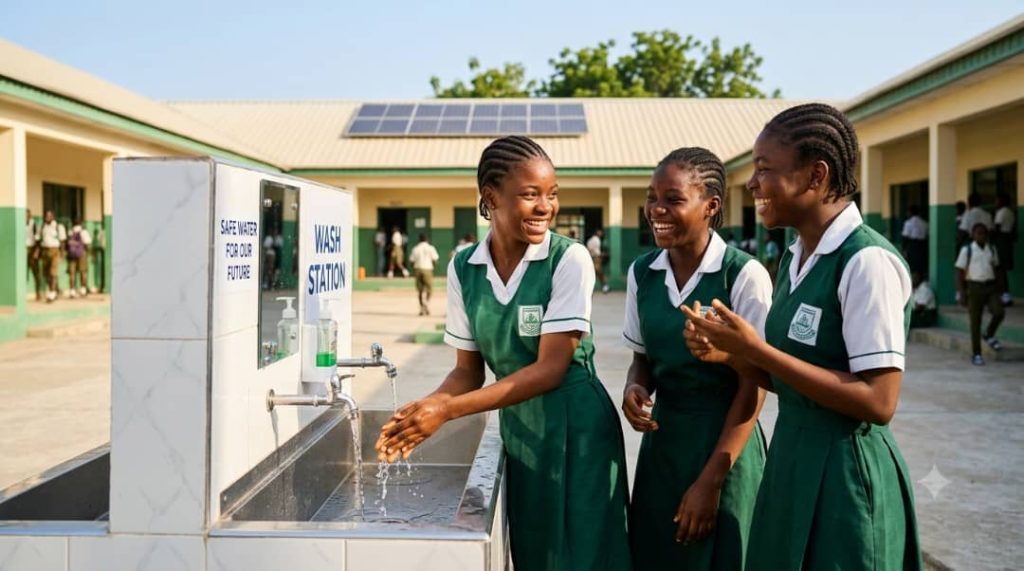
When we think about education, we often picture classrooms, teachers, uniforms and textbooks. We rarely think about water. Yet for many teenage girls in Nigeria, something as basic as having clean water at school can determine whether they stay in class or go home.
For a girl who is menstruating, access to clean water is not a luxury, it is essential. Without water to wash her hands, clean herself or maintain good hygiene, going through the school day can become uncomfortable, stressful and even embarrassing. This is why improving water, sanitation and hygiene in schools is not just a health issue. It is also an education and gender equality issue.
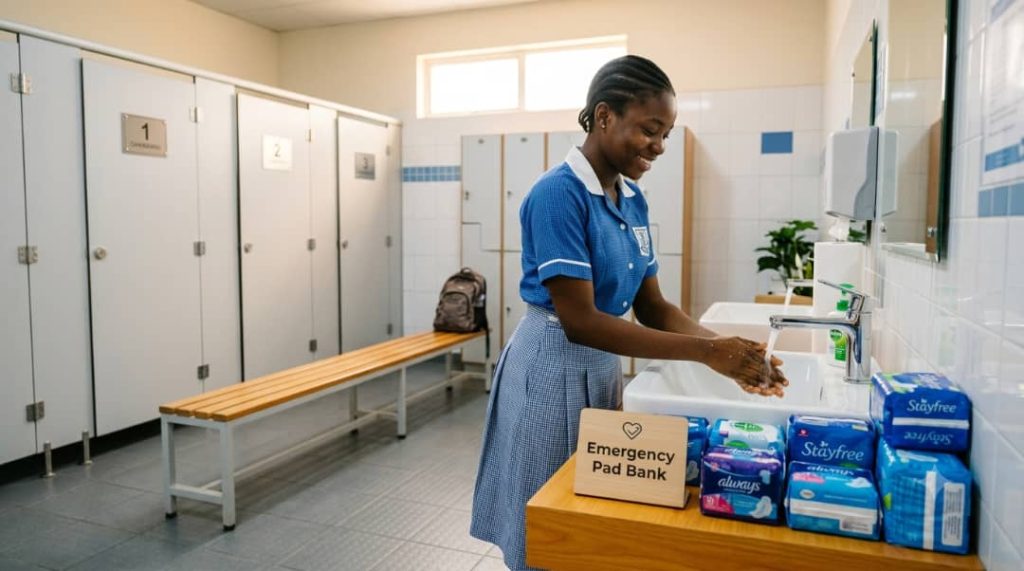
At The Williams Hope Alive Humanitarian Foundation, we believe that no girl should have to miss school because she is on her period. Every girl deserves to attend school with confidence, knowing there is clean water, safe toilets and, when needed, access to an emergency pad bank. These simple facilities help girls stay healthy, protect their dignity and keep them focused on learning.
Nigeria continues to face serious challenges in providing safe water and sanitation for everyone. According to the World Bank, about 60 million Nigerians still lack access to basic drinking water services. Women and girls are often the most affected because they are more likely to spend time collecting water and are disproportionately affected by poor sanitation.
The challenge is even greater for children. UNICEF reports that unsafe water, poor sanitation and poor hygiene continue to contribute to illness and death among Nigerian children. Diseases such as diarrhoea, cholera and typhoid remain common in communities without safe water. They affect children’s health, interrupt their education and place additional pressure on families.
According to a national WASH survey conducted by UNICEF and Nigeria’s Federal Ministry of Water Resources, many Nigerians still struggle to access sufficient quantities of safe water each day. The survey also highlights persistent challenges with water quality and sanitation, including the continued practice of open defecation in many communities.
These challenges become even more difficult for girls during menstruation. Managing a period safely requires clean water, soap and a private toilet. Without these facilities, many girls struggle to stay comfortable throughout the school day. Some worry about staining their uniforms, while others choose to stay at home until their periods end.
Evidence from the WHO and UNICEF Joint Monitoring Programme for Water, Sanitation and Hygiene shows that schools with reliable water, sanitation and hygiene facilities provide a healthier and more supportive learning environment for girls. Access to clean water and private, usable toilets helps girls manage menstruation with dignity and removes one of the barriers that can keep them out of school.
The benefits go beyond menstrual health. The World Health Organization notes that improving water, sanitation and hygiene significantly reduces the burden of diarrhoeal diseases and helps create healthier learning environments. When students are healthier, they are more likely to attend school consistently and participate fully in class.
Reliable water also allows schools to provide handwashing facilities, keep toilets clean and maintain a healthier environment for both students and teachers. UNICEF’s data on WASH in schools shows that improving these services is essential for children’s health, safety and learning outcomes.
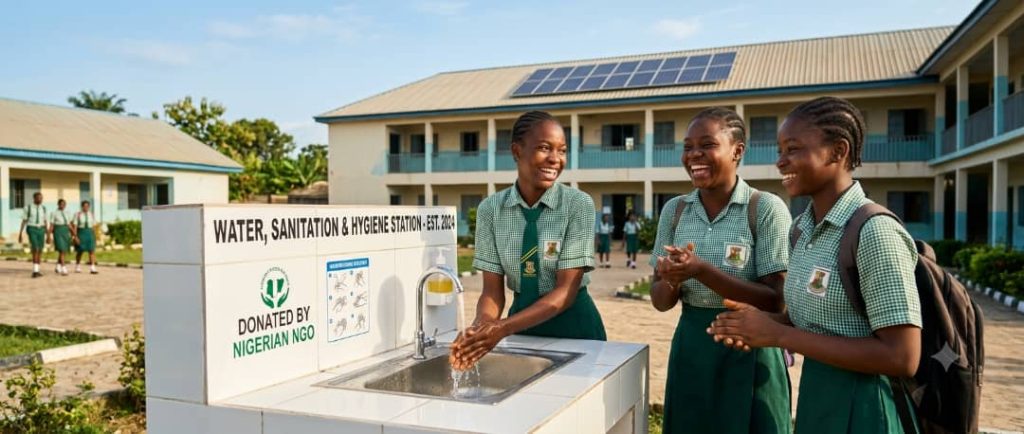
This is why investing in school water projects has such a lasting impact. A solar-powered borehole, clean toilets, handwashing stations and menstrual hygiene support can transform a school. These facilities help girls remain in class, improve their confidence and make schools safer and more welcoming for every student.
Education should never depend on whether there is water in a school’s taps. Every girl deserves the opportunity to learn without worrying about where she will wash her hands or manage her period. Clean water gives girls more than better health. It gives them confidence, dignity and a fair chance to succeed.
As governments, development partners, communities and organisations continue working to improve education in Nigeria, school water projects deserve to be treated as a priority. By providing reliable water, safe sanitation facilities and menstrual hygiene support, we can help ensure that no girl is left behind simply because of a lack of basic services.