Water is one of the most fundamental requirements for human survival. Yet, beyond quenching thirst and supporting everyday activities, access to clean water and adequate sanitation plays a significant role in determining the health, education, dignity and economic opportunities available to individuals and communities.
When a community gains access to safe drinking water, functional toilets and proper hygiene facilities, the benefits extend far beyond improved living conditions. Children are better positioned to attend school, families face fewer preventable health risks, and women and girls gain more opportunities to participate in social and economic activities. Water, sanitation and hygiene (WASH) are therefore not simply infrastructure concerns; they are essential components of sustainable human development.
Global Challenge That Remains Unresolved
Despite decades of international development efforts, access to safe water and sanitation remains a significant global challenge.
According to the 2025 report by the World Health Organization (WHO) and the United Nations Children’s Fund (UNICEF), approximately 2.1 billion people worldwide still lack safely managed drinking water, while 3.4 billion lack safely managed sanitation services. Furthermore, 1.7 billion people do not have access to basic hygiene services at home.
These figures reveal the scale of an ongoing public health and development crisis. Inadequate water and sanitation expose communities to preventable diseases, including cholera, diarrhoeal infections and other waterborne illnesses.
The WHO identifies contaminated food and water as major transmission routes for cholera, highlighting the importance of safe water supplies, adequate sanitation and proper hygiene practices in preventing outbreaks.For families already struggling with poverty and limited healthcare access, the consequences can be devastating. What should be a basic necessity becomes a daily struggle with potentially life-threatening consequences.
The Disproportionate Burden on Women and Girls
Although inadequate WASH facilities affect entire communities, women and girls often experience a disproportionate share of the burden.
In households without water on their premises, the responsibility for collecting water frequently falls on female household members. UNICEF reports that women and adolescent girls aged 15 and above are responsible for water collection in seven out of ten households where water is accessed away from home.
This responsibility can consume valuable time that could otherwise be spent pursuing education, employment or other productive activities. In some communities, long journeys to collect water also expose women and girls to physical exhaustion, harassment and safety risks.
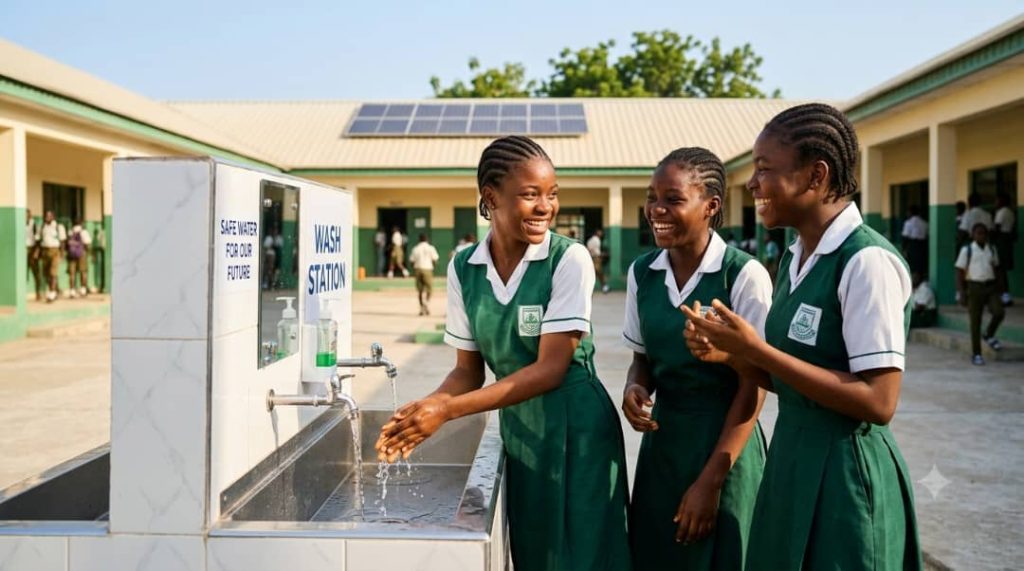
Sanitation presents another challenge, particularly for adolescent girls. The absence of private, clean and functional toilets in schools and communities can make managing menstruation difficult. Without adequate water, menstrual hygiene facilities, disposal systems and reliable information, girls may experience discomfort, embarrassment and restrictions on their participation in school activities.
A 2024 WHO and UNICEF report on WASH in schools revealed that only 39 per cent of schools worldwide provided menstrual health education in 2023. This highlights the need to approach sanitation alongside menstrual health education and gender equality.
Providing safe toilets, accessible water points and menstrual health information is therefore not merely about improving facilities. It is about protecting dignity, supporting educational participation and creating environments where girls can reach their full potential.
Community Participation: The Foundation of Sustainable Solutions
Addressing water and sanitation challenges requires more than constructing boreholes, installing water pumps or building public toilets. While infrastructure is essential, its long-term effectiveness depends significantly on proper management, maintenance and community ownership.
The United Nations recognises this through Sustainable Development Goal 6 (SDG 6), which seeks to ensure the availability and sustainable management of water and sanitation for all.
Importantly, Target 6.b specifically calls for strengthening local community participation in improving water and sanitation management.
This approach recognises that people who experience these challenges firsthand should have a voice in determining the solutions. Community members understand their local needs, cultural practices, environmental conditions and the barriers that may affect the success of development interventions.
Partnerships between governments, development organisations, private institutions and grassroots actors are equally important. Through collaborative efforts, communities can benefit from improved infrastructure, hygiene education, water management initiatives and systems that encourage accountability. More importantly, involving women and other underserved groups in decision-making ensures that interventions reflect the needs of those most affected.
Investing in Water Is Investing in the Future
Access to clean water and adequate sanitation is closely connected to several development priorities, including good health, quality education, gender equality and poverty reduction. A child who does not have to spend hours searching for water has more time to learn. A girl who has access to a private school toilet can participate in her education with greater confidence. A family with reliable access to safe water is better protected against preventable waterborne diseases.
These are interconnected development outcomes that demonstrate why WASH interventions must remain a priority for governments, humanitarian organisations, development partners and local communities. Clean water and adequate sanitation should never be privileges determined by geographical location, income or gender. They are fundamental human rights and essential conditions for human dignity.
Ultimately, investing in water and sanitation means investing in healthier families, empowered women and girls, stronger communities and a more equitable future. When communities have access to clean water and safe sanitation, they gain more than essential services; they gain opportunities to live healthier, safer and more fulfilling lives.