

For a long time, many people believed that students who struggled with mathematics simply were not intelligent enough, did not study hard enough, or just were not “math people.” Today, research tells us a different story. Many students who perform poorly in mathematics may not be lacking in ability, they may probably be dealing with mathematics anxiety.
Mathematics anxiety, sometimes called math phobia, is the fear, worry, or stress people experience when they have to solve mathematical problems. It is more than just feeling nervous before a test. It can interfere with thinking, reduce confidence, and prevent capable students from reaching their full potential, especially in Science, Technology, Engineering, and Mathematics (STEM).
The problem is much bigger than many people realize. According to UNESCO’s 2024 Gender Report, about one in every five people worldwide experiences high levels of mathematics anxiety. This shows that it is not just an issue in a few schools or countries—it is a global challenge.
The OECD’s 2022 Programme for International Student Assessment (PISA), which surveyed 15-year-old students around the world, paints an even clearer picture. More than six out of ten students said they worried that mathematics classes would be too difficult. About 65% feared getting poor grades, while 55% said they regularly worried about failing mathematics.
Research also shows that mathematics anxiety has a direct effect on performance. Students with high levels of anxiety often score lower on mathematics tests than students with less anxiety, even when they have similar levels of intelligence. In other words, anxiety (not ability) is often the reason for poor performance.
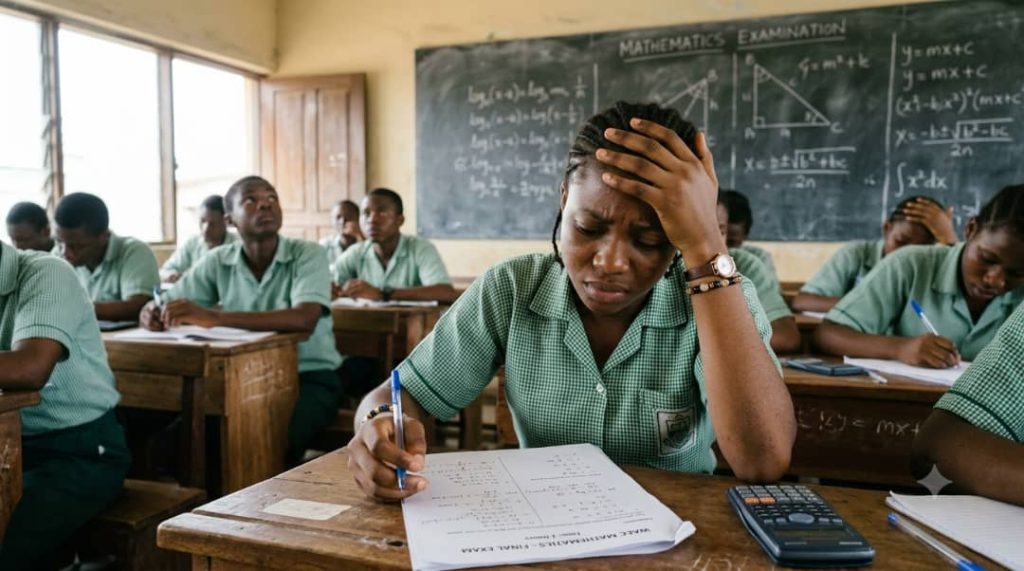
Girls are especially affected. Studies consistently show that they experience mathematics anxiety more often than boys, even though their actual mathematical abilities are just as strong. This suggests that the difference is not caused by intelligence but by social expectations, stereotypes, and environmental factors.
So, where does mathematics anxiety come from?
Children are not born afraid of mathematics. In most cases, the fear develops through experience. One major cause is the way mathematics is often taught. Many classrooms focus on getting the one correct answer, making students feel that every mistake is a failure. This pressure can make them afraid to answer questions or try new methods because they fear being embarrassed.
Another common cause is teaching that relies heavily on memorizing formulas instead of understanding concepts. When students are expected to remember rules without learning why they work or how they apply in real life, mathematics can seem confusing and meaningless. As a result, even small mistakes can make them feel helpless.
Parents and teachers can also pass on mathematics anxiety without realizing it. Statements like, “I was never good at math either,” may sound comforting, but they can send the message that mathematical ability is something people are born with rather than something they can develop. This can lead students to believe they are simply not capable of succeeding.
Time pressure is another major trigger. Timed tests and speed drills can increase stress, especially for anxious students. When people panic, their brains become flooded with stress hormones, making it harder to use their working memory, which is the part of the brain that helps us hold and process information while solving problems. Since mathematics depends heavily on working memory, anxious students may suddenly forget steps they normally know. The more they panic, the worse they perform, creating a cycle that becomes harder to break.
Because mathematics anxiety is a psychological problem, it cannot be solved by simply giving students more worksheets or making them practice for longer hours. In fact, forcing anxious students to do more difficult mathematics without addressing their fear can make the problem even worse.
Instead, students need support that addresses both their emotions and their learning.
One helpful strategy is expressive writing, sometimes called a “worry dump.” Before a mathematics test, students spend about ten minutes writing down everything they are worried about. Putting their fears on paper helps clear their minds, allowing them to focus more on solving problems instead of worrying.

Another effective approach is cognitive reappraisal, which teaches students to think differently about stress. Instead of seeing a racing heart or sweaty palms as signs that they are about to fail, they learn to see these reactions as their body’s way of preparing them to meet a challenge. This small change in thinking can reduce anxiety and improve concentration.
Schools can also help by changing how mathematics is taught and assessed. Instead of relying only on timed tests and individual work, teachers can use group activities, real-life examples, games, and projects that make mathematics more engaging and less intimidating. These approaches encourage students to see mistakes as part of learning rather than signs of failure.

Mathematics is not a talent reserved for a few gifted people. It is a skill that can be learned and improved with the right support, practice, and mindset. By creating classrooms where students feel safe to ask questions, make mistakes, and build confidence, we can reduce mathematics anxiety and help more young people discover their true potential.