
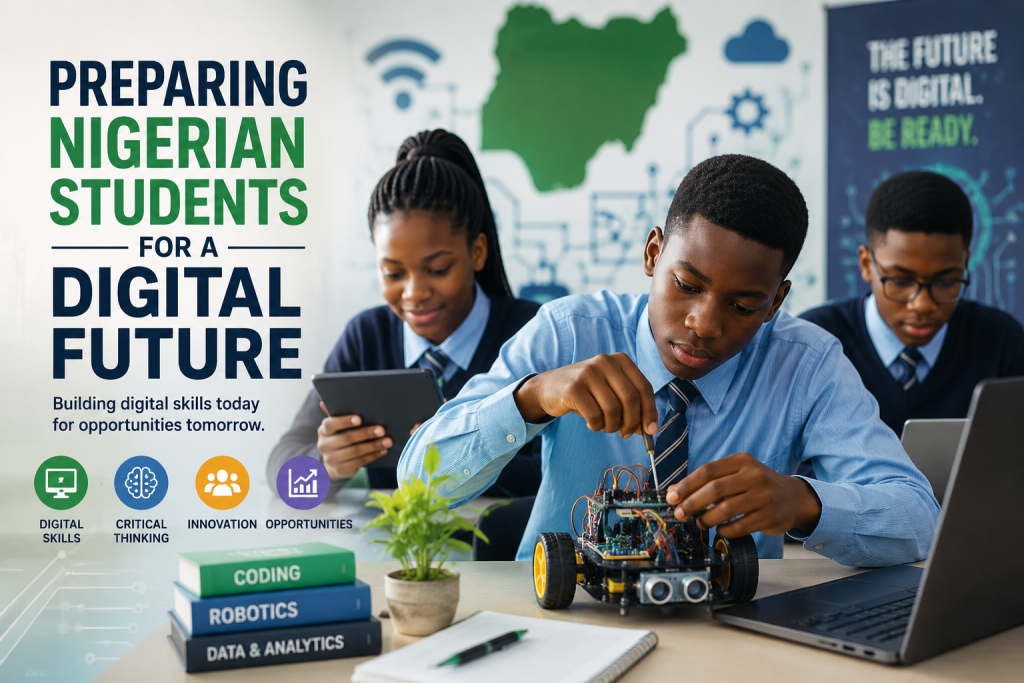
The world of work is changing quickly. Technology, artificial intelligence, and digital tools are becoming part of everyday work in almost every sector. As this happens, employers increasingly need people who can use technology confidently and solve problems with digital tools.
But many young Nigerians are entering adulthood without these basic skills.
This creates a growing gap between the skills young people have and the skills they will need for further education, employment, and entrepreneurship. If Nigeria wants its young population to benefit from the opportunities created by technology, digital skills need to become a stronger part of education.
The Growing Demand for Digital Skills
Digital skills are no longer needed only for technology jobs. They are becoming useful across many different types of work.
A 2025 World Bank analysis of online job postings in four African countries found that almost half of all job postings required at least one digital skill. Basic skills such as computer literacy and the use of tools like Microsoft Word and Excel appeared frequently, while more advanced skills such as programming and data analysis were also increasingly in demand. By 2024, advanced digital skills appeared in about 20% of job postings in the countries studied.
This means that digital skills are becoming part of the basic requirements for participating in the modern economy. For Nigerian students, this raises an important question: Are they getting enough opportunities to develop these skills before they leave school?
Nigeria’s Digital Skills Gap
The answer is a concern.
A World Bank assessment of digital skills in Nigeria found that the country needs to strengthen digital skills education from an early age. It specifically recommends integrating digital literacy into primary and secondary education and improving teacher training so that teachers can effectively teach digital skills. The report also points to a gap between Nigeria’s digital-skills policies and their implementation.
UNICEF also highlights the scale of the challenge. According to its 2025 assessment of digital learning in Nigeria, only 36% of the population was using the internet, while 78% of young people lacked digital literacy skills. UNICEF also reported that only 47% of teachers had basic ICT skills. Limited access to electricity and broadband, particularly in rural areas, adds another challenge.
These numbers show that the problem is not simply about whether students have heard of computers or the internet. It is about whether they have enough access and practical opportunities to develop the skills they will need.
The Problem Starts in the Classroom
Students cannot develop strong digital skills if they have little opportunity to use technology.
The World Bank’s assessment of Nigeria’s digital-skills landscape identifies access to digital infrastructure and equipment in schools as an important part of the country’s digital-skills challenge. It also points to the need for stronger digital-skills training for teachers.
This is important because knowing about technology is not the same as knowing how to use technology.
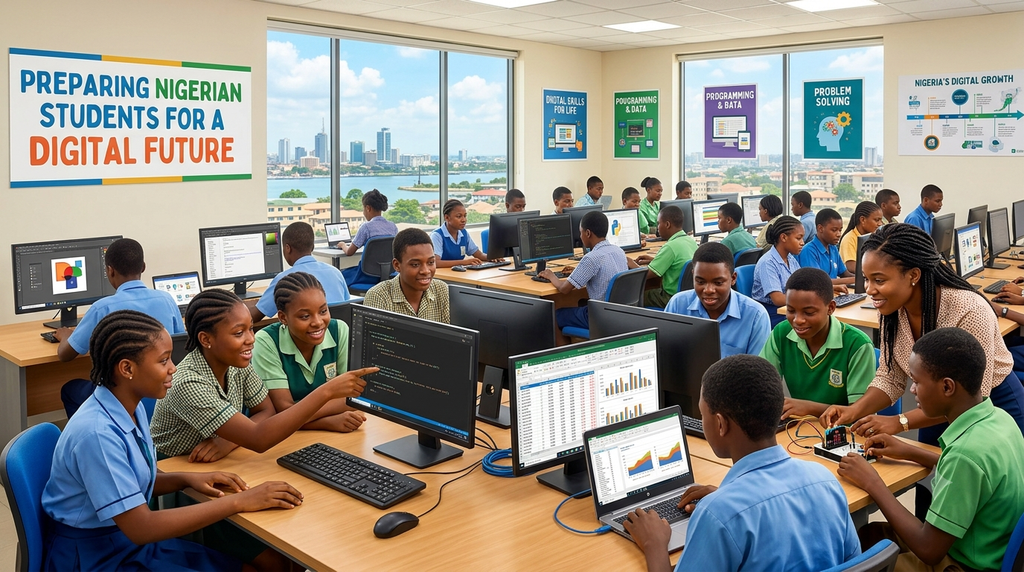
A student may learn the definition of a computer, read about software, or answer questions about technology in an examination without ever having enough opportunity to use digital tools to create something, solve a problem, analyse information, or complete a practical task.
For digital education to be useful, students need opportunities to practise.
Teachers Are Part of the Solution
Teachers also need support.
Technology is changing quickly, and teachers need the knowledge and confidence to use digital tools effectively in teaching. The World Bank’s review of digital teaching competencies identifies areas such as using digital resources, designing technology-supported learning activities, assessing students digitally, and continuing professional development as important parts of teachers’ digital competence.
In Nigeria, UNICEF reports that fewer than half of teachers have basic ICT skills. This makes teacher development an important part of improving students’ digital learning opportunities.
Simply putting computers or other devices in schools is therefore not enough. Teachers need to know how to use those tools in ways that actually support learning.
Girls and Other Underserved Students Can Be Left Behind
The digital skills gap also reflects wider inequalities.
UNICEF’s Nigeria Education Fact Sheets found that only 7% of Nigerians aged 15–24 had ICT skills based on the skills measured in its survey. It also found differences by gender and location, with males and young people in urban areas more likely to have ICT skills than females and young people in rural areas.
This matters because students who have fewer opportunities to use technology at home or in school may have fewer chances to develop the skills that are increasingly important for education and employment.
Girls, students in rural communities, and students from poorer households should therefore not be left out of efforts to improve digital education.
From Learning About Technology to Using It
There is strong evidence that students benefit when learning becomes more practical and interactive.
A systematic review of STEM projects in middle and high schools found that many studies reported improvements in students’ content knowledge, problem-solving, creativity, collaboration, motivation, and engagement when students took part in STEM projects.
Another meta-analysis of 26 studies involving more than 3,200 students found that informal project-based STEM learning had a positive effect on students’ learning compared with traditional classroom approaches.
Research on educational robotics also points to the value of learning by doing and project-based approaches for student engagement, motivation, and learning.
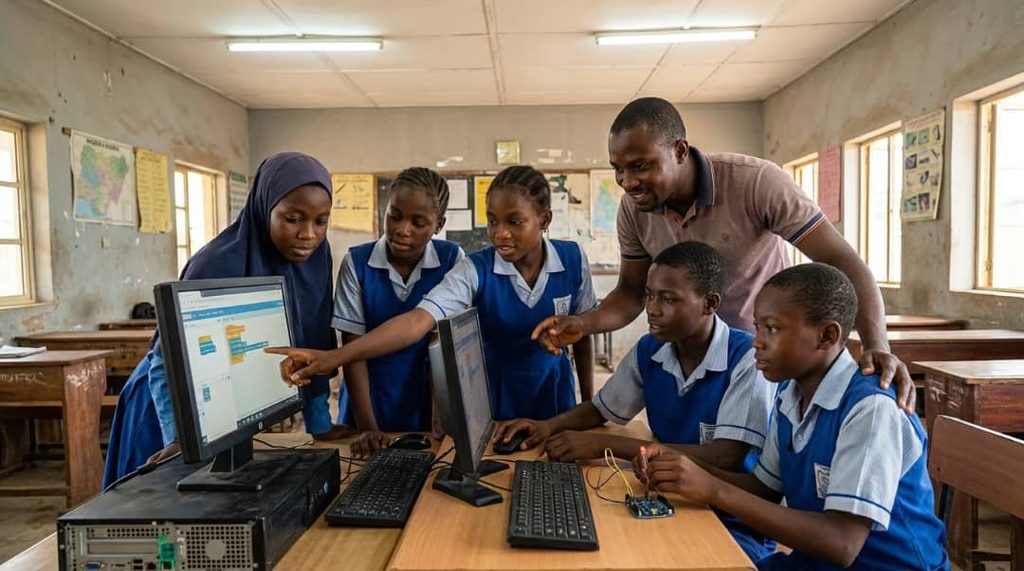
The lesson is simple: students should not only read about technology. They should have opportunities to use it, experiment with it, build things, solve problems, and learn from their mistakes.
Preparing Students for What Comes Next
Nigeria has a large and young population, and technology will continue to shape the opportunities available to them. Preparing young people for this future requires more than teaching them how to pass examinations.
They need opportunities to develop practical digital skills, think critically, solve problems, work with others, and become confident users and creators of technology.
The goal is not to turn every student into a software developer or engineer. It is to ensure that young people are not excluded from future opportunities simply because they did not have the chance to develop basic digital skills while they were in school.
If Nigeria wants its young people to participate fully in the digital economy, digital education must move beyond theory and give students more opportunities to learn by doing.